Fallon · Churchill County

Fallon windows and doors: alkali dust, irrigation humidity and hardware that keeps working

Fallon sits at roughly 3,960 feet on the Lahontan Valley floor: the lowest and hottest ground we work on, and the only part of it that is dry desert most of the year and damp over irrigated fields for the rest. What that attacks is not the glass. It is the drainage and the moving parts.

  • ≈ 3,960 ft valley floor
  • Lahontan alkali fines
  • High summer solar load
  • City and county addresses
  • Windows, doors, siding
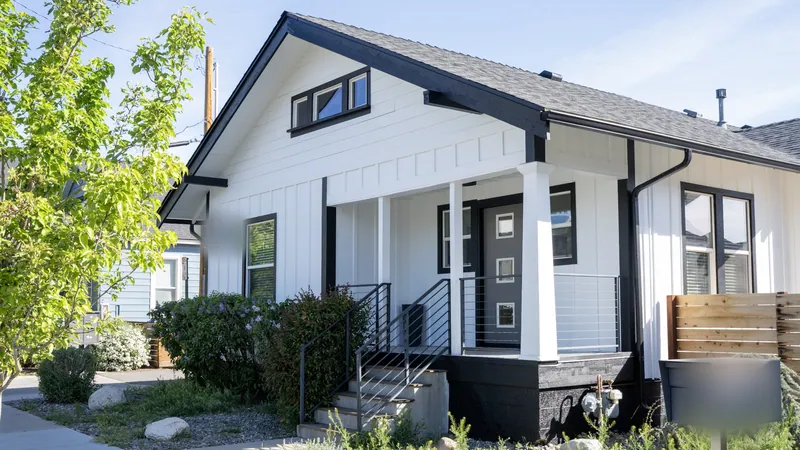
A single-storey house clad in white board-and-batten with black window frames, a dark entry door under a covered porch, and a black skirt along the foundation

The local failure mode

Fines in the weep system: why Fallon sliders fail before their frames do

A modern window is drained, not sealed. Wind pushes a little water past the outer seal on purpose; it collects in the chamber under the sash and leaves through weep slots at the outboard edge of the sill, behind small flaps that stop the wind blowing back in. That system is why the wall stays dry, and it works only while the channels are clear.

The Lahontan Valley and the Carson Sink are a regional dust source, and what they produce is alkali fines, far finer than the sand people picture, carried dry on the wind, and inclined to stay put once damp. It settles into exactly those channels. A packed weep is not a drain, so the sill chamber holds water instead of releasing it, and a sash sitting in standing water takes its rollers, balances and fasteners down with it. The frame is usually the last thing wrong with the window.

The track is the other half. Pile weatherstrip in a slider is a brush, and grit turns a brush into an abrasive: the pile wears short, the unit starts leaking air at the meeting rail, and the sash gets heavier every season. Manufacturers class that as wear rather than a defect, which is why it is worth designing around rather than arguing about later. How frame, glass and operation are chosen for that is laid out under replacement windows.

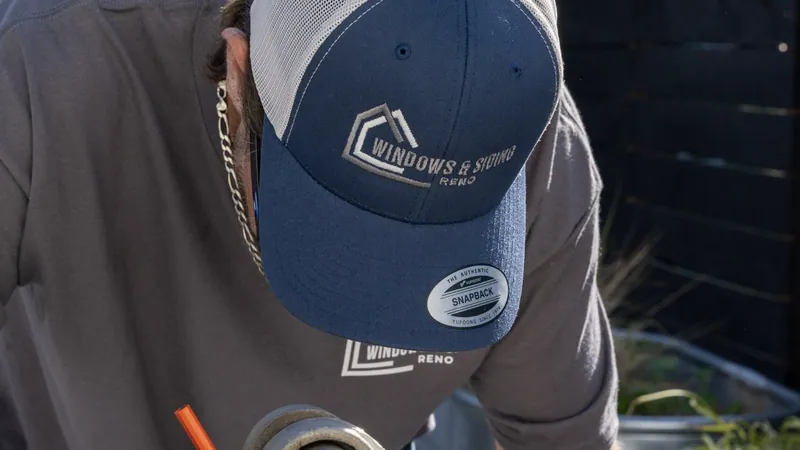
A Windows and Siding Reno installer bends low over his work, the logo cap and chest logo facing the camera
  • Fewer exposed sliding surfaces on the walls that take the wind
  • Compression seals where the opening allows one
  • Weep slots you can actually reach to clear, and we show you where they are

Which counter

City of Fallon or Churchill County: two building departments, one town

A Fallon mailing address does not tell you which government reviews the work. Inside the city limits it is the City of Fallon Building Department at 55 W. Williams Avenue. Outside them (and a good deal of what everybody calls Fallon is outside them), it is Churchill County, whose building department is at 270 S. Maine Street, Suite A, and which takes submittals through its online portal rather than a walk-in counter.

That distinction follows the parcel, not the mailbox, and the two are not interchangeable. We confirm which one covers the address and what it expects for a like-for-like replacement before any order is placed. Churchill County reviews unincorporated parcels through its Building Department and takes applications on an online portal, while a parcel inside Fallon city limits is the City of Fallon to review, and neither publishes a like-for-like exemption we are willing to repeat here on their behalf. None of it changes the product that ends up on the wall. It changes the paperwork and the calendar, which is worth knowing before you sign rather than after.

Entry doors

Fiberglass and steel entry doors at 3,960 feet and a 100-degree afternoon

An entry door on a west or south elevation here is the hardest-worked component on the house: a large, flat, often dark surface standing in full sun with conditioned air against the other side, expected to stay flat and keep sealing while that gradient reverses every night.

A steel door is a formed skin over a foam core on a wood or composite frame. It is the stronger of the two at the lock, it costs less, and its coating is the entire defence: once that is broken at an edge, a hinge screw or a kick plate, the substrate has no second line. A dark colour on a sun-facing slab makes that harder, not easier.

A fiberglass door is a moulded skin over the same kind of core. It moves less under heat, it carries a dark finish more comfortably, and it does not corrode at all, which matters where the dust is alkaline and the ground around town is under irrigation for part of the year. It costs more, and it fails differently when something hits it: it cracks rather than dishing. We carry Codel and Jeld-Wen entry door lines and will price either construction.

Whichever slab you choose, the parts that decide whether the door still works in ten years are the ones nobody itemises: the threshold and its adjustment, the sweep, the compression weatherstrip in the jamb, and the finish on the hinges and lock. On a west elevation we would rather spend there than on the slab, and those items are named on the scope.
Product lines

The lines that go on a Lahontan Valley house, and what each one answers

The same six lines we carry everywhere, specified differently for this valley floor.

Replacement windows

Glazing chosen for a long solar day rather than a long winter, and operation chosen for how much track the wind can reach.

Lines
Alside · Andersen · Jeld-Wen
Leads on
Solar heat gain on the sun walls
Watch
Weep access, track pile, roller life

Entry and patio doors

Fiberglass or steel slabs, with the threshold, sweep and hardware finish specified as their own decisions rather than as accessories.

Lines
Codel · Jeld-Wen
Leads on
Heat stability on a west elevation
Watch
Sill track, sweep, hinge and lock finish

Siding, trim and fascia

Out here the governing question is ultraviolet load and finish life, not freeze damage. That pushes the sun walls toward a factory-finished board.

Lines
Alside · James Hardie · LP SmartSide
Leads on
Finish life under UV
Watch
End grain, fascia edges, dark colours

How it works

How the estimate works out here

Fallon is roughly 60 road miles east of the shop on Watson Way in Sparks, along US-50. That distance is why the visit is planned rather than squeezed into a gap: better to come once, measure every opening, look at the sill and sheathing wherever they are visible, and leave with enough to write a real scope.

What you get back names the product line, the operating style, the glass package or the profile, the hardware, and the manufacturer's own certified rating and warranty documents. Substrate repair, if we find it, is a priced line rather than a conversation held after the wall is open. Nothing comes off the house until the units are at the shop and have been checked against the order.

  • Scheduling and travel for Fallon addresses: confirmed on the call when you book the measure visit; Fallon is part of our regular service area, and the estimate visit is free there like everywhere else we work
  • Call before you plan around a date, and we will tell you plainly what we can book
  • Every opening measured on the visit, not estimated from a photograph
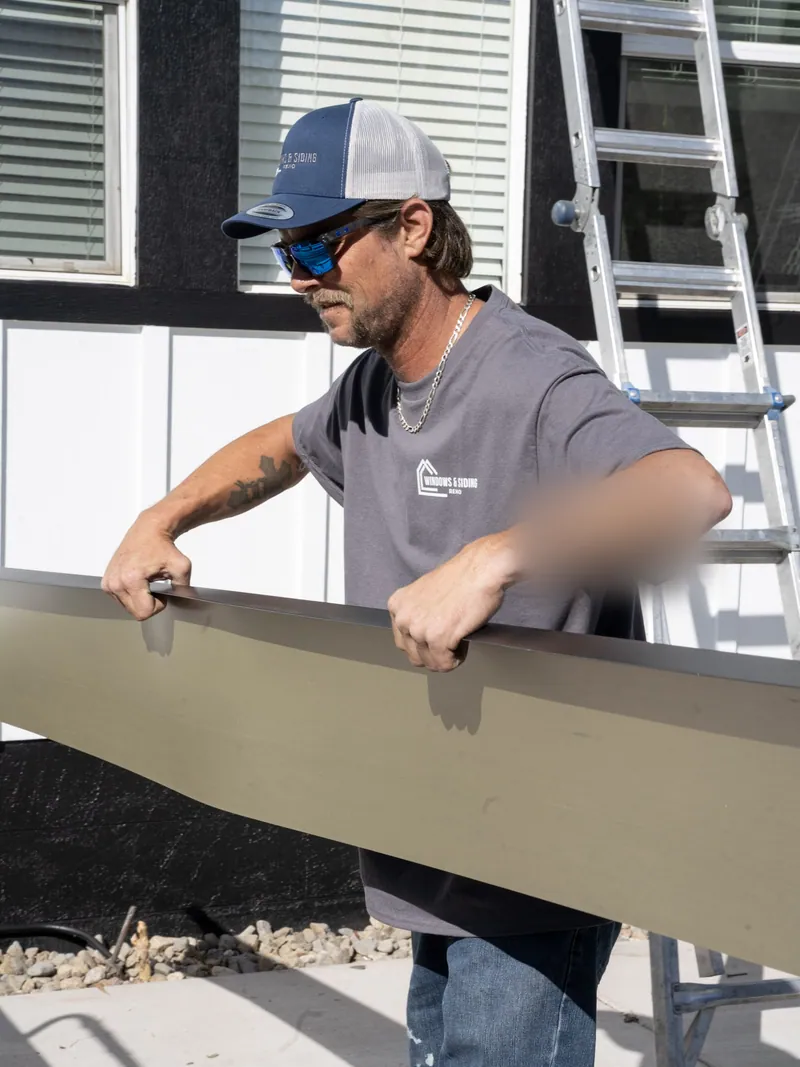
Crew member carrying a long formed fascia piece past the house
A fascia run formed in one piece. Longer formed lengths mean fewer joints at the eave, and joints are where weather starts.

Before you buy

Ordering questions we hear from Churchill County

On the sun-facing walls, usually yes. This is the lowest and hottest ground we work on, so the load running the longest hours is heat arriving through the glass rather than heat leaving through it, and solar heat gain coefficient is the number that governs it. U-factor still earns its keep on winter nights and north elevations. Both are on the certified label for the exact unit, and both go on the scope.

Finish helps; geometry helps more. A tighter hardware finish resists the pitting abrasive dust starts, but the bigger gain is choosing an operation with fewer sliding surfaces exposed to the wind. A hinged sash pulling into a compression seal has far less track for fines to sit in than a roller in an open sill. Where a slider is the right answer anyway, the track and the pile get specified rather than defaulted.

Fiberglass, more often than not. A steel door is stronger at the lock and costs less, but its coating is the whole defence, and once that is broken the substrate has no second line. Fiberglass does not corrode, moves less under heat, and carries a dark colour on a sun-facing slab more comfortably. Steel still wins where the door is shaded and impact resistance is the priority.

Treat them as a maintenance item, like a gutter. Twice a year, run a soft brush along the sill track and check that the weep slots at the outboard edge are open and the little flaps over them still swing. It is a five-minute job that prevents the slow one. We show you where they are before we load out, because they are not obvious and no manufacturer warrants a blocked drain.

Along the same corridors

West of here on US-50 and I-580

Each city page covers the exposure that city actually has and the product list that answers it.

See the full service area

Next step

Tell us the Fallon address and what the openings are doing

Say roughly how many openings there are and which ones stick, fog or will not seal. You do not need to know whether the parcel is inside Fallon city limits: we will confirm which building department covers it, what we can schedule out there, and what a measure visit would involve, before anybody talks about product.

Prefer to talk? The shop line is (775) 391-8487, Monday to Friday, 9:00 AM to 4:00 PM.

  • Hardware, threshold and weep detailing named on the scope, not assumed
  • Certified label numbers for the actual unit, attached to the quote

Request a free estimate

Fields marked * are required.

It tells us which building department to check with.