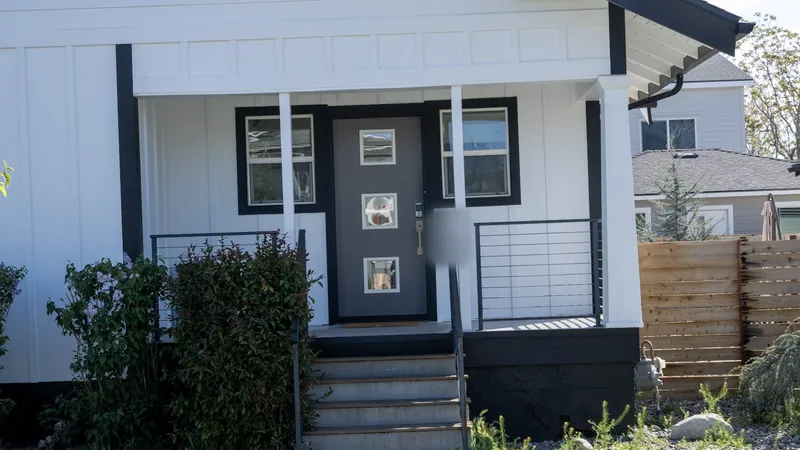
An entry door replacement in Reno or Sparks is priced from six things: the slab material, the glass in and around the slab, the lockset and hardware, what happens to the frame and the threshold, the condition of the opening and the wall around it, and the paperwork that travels with the job. We do not publish a door price range, and our window and siding cost calculator prices windows and siding only, so a door is priced once its opening has been measured. What follows is what each of the six does to a quote, so you can read ours or anyone else’s line by line.
The short version: the slab material is the smaller part of the number. On the Codel entry systems we carry, the glass insert moves the price further than the choice between steel and fiberglass does, and the threshold, the weatherstrip and the hardware decide whether the door still works in ten years.
| Driver | What moves the number | Ask to see it written as |
|---|---|---|
| Slab material | Steel costs less than fiberglass; wood brings a refinishing schedule with it | The product line and the slab material, by name |
| Glass | A lite in the slab, sidelites, a transom, and laminated or obscure glass over tempered | Every glass panel, with its glazing type |
| Hardware | The lockset, and whether it is a multipoint | The lockset by name, chosen with the door |
| Frame and threshold | A door built to the opening with its own frame, or the existing frame kept | Which one, and why, with the threshold, sweep and weatherstrip named |
| The opening | Rot at the sill, an opening out of square, a wider opening, the wall finish | Substrate repair as an allowance or an exclusion |
| Paperwork | Permit, lead time and warranty | Who pulls the permit, the manufacturer’s lead time, both warranties |
The slab: steel, fiberglass or wood
Steel is the lower-cost slab of the two common materials, and the stronger of the two at the lock. Its coating is its whole defence, though, so a chip at an edge, a hinge screw or a kick plate becomes a maintenance item. Fiberglass costs more, moves less under heat, carries a dark colour more comfortably and does not corrode, which is why it is usually our answer on a west or south entry in full sun. Wood is chosen for the look, and its cost carries on after the install: it wants a covered entry and a refinishing schedule.
Ask for the product line by name, not just the material, the same way you would on a window quote. “Fiberglass door” on an estimate describes a material, not a product, and two bids that both say it can be pricing very different doors.
The glass: the line that moves the number most
Most of what makes an entry look expensive is glass: a lite (a single pane) in the slab, a sidelite on one or both sides, a transom above. Every piece is another opening with its own seal and its own glazing, and on the Codel door systems we carry, the glass insert swings the price further than the slab material does.
Glass in and beside a door has to be safety glazing, tempered or laminated. Laminated holds together when it breaks; it also weighs more, costs more and usually takes longer to get than tempered, because it is not the stocked build. Obscure or textured glass (the kind that lets light in but blurs the view) is a separate build too, and like laminated, it can add to the lead time.
The hardware: chosen with the door, not after it
The lockset belongs on the door quote, not on a later trip to the hardware store. A multipoint lock (one handle that locks the door at several points at once) pulls a tall slab tight to its weatherstrip at three points instead of one, which makes it a sealing line as well as a security line. It is also the part to choose with care: the gearbox is the expensive part on the door, with the longest lead time, and forcing a stiff handle is what breaks one. The door lines we carry, and how the hardware is specified with them, are on our entry and patio door page.
The frame and the threshold
The frame is the scope line worth reading twice. A door built to the opening as a complete unit, frame and threshold included, is what we reach for when the old frame is out of square or the sill under it has been taking water: the old frame comes out, and the sill pan (the drainage tray under the threshold) and the flashing can be reached and rebuilt. Where the frame and the sill are square, dry and sound, less of the opening has to be disturbed. As on a patio door, the two price differently, so the quote should say which it is, and why.
Then the parts that rarely get a line of their own on a quote: the threshold and how it adjusts, the sweep, the weatherstrip that compresses in the jamb, and the finish on the hinges and lock. On a sun-beaten west elevation we would rather spend there than on a heavier slab, and each of them is named on our scope.
The opening and the wall around it
Some of the cost sits outside the door, and nobody can price it until the old frame is off: rot at the sill or in the framing under it, an opening framed out of square, or an earlier change made without a proper header (the beam over an opening that carries the wall above). A written estimate should carry these as an allowance at a stated rate, or as a stated exclusion. Silence is the defect, not the exclusion.
The wall finish matters too. Interior and exterior trim are rebuilt around a new frame, and in a stucco wall a frame that comes out leaves a patch to be cut back, lathed and textured, with no promise of a seamless colour match on a wall that has aged in the sun. Widening the opening to add sidelites is not a replacement at all: it is structural work, a cut-in, with a new header to carry the wider span and a permit to go with it.
Permit, lead time and warranty
Sparks lists like-for-like window and door replacement among the work it exempts from a permit. Reno publishes no such exemption and defers to the International Residential Code, which grants none. Either way, the quote should say whether a permit is included and who pulls it, and we confirm what the building department requires for the address before anything is ordered.
Lead times come from the manufacturer. The quote should carry the window the manufacturer gave, not a date improved to win a signature, and glass upgrades or a colour that has to be matched can lengthen it.
Two warranties travel with the door: the manufacturer’s limited warranty on the door system, in the manufacturer’s own document, and ours on the installation, which our contract sets at one year and limits to installation labour for the work our crew did.
What a written entry door estimate should name
- The product line and the slab material, by name
- Every glass panel (slab lite, sidelites, transom) with its glazing: tempered, laminated or obscure
- The lockset by name, and whether it is a multipoint
- Whether the frame and the threshold are replaced or kept, and why
- The threshold, the sweep and the weatherstrip as named items
- The finish and colour, inside and out
- Interior and exterior trim, and any stucco or siding patch
- Substrate repair as an allowance or an exclusion
- Removal and disposal of the old door
- Whether a permit is included, and who pulls it
- The manufacturer’s lead time, as the manufacturer gave it
- Both warranties: the manufacturer’s document and the installer’s labour terms
Compare two quotes against that list, not against each other’s totals. When one is far below the other, the answer is usually on one of those lines, and how to read a cheap exterior bid sets out the same reading for any exterior job.
For choosing the material, the glass and the lock in the first place, start with our entry and patio door guide for Reno. The sliding and hinged side of the same question is in patio door replacement cost.